Form 4 Biology imtixaanka qaranka 2022 iyo jawaabihiisa
Imtixaanka qaranka Fasalka 4aad ee 2022 ee Form 4 Biology, su'aal su'aal. Ku gal adigoo waqti leh sida imtixaanka dhabta ah, kadibna arag jawaabta iyo sharaxa su'aal kasta.
- 51 su'aalood, 100 dhibcood
- 120 daqiiqo
Gal imtixaankan
120 daqiiqo, 100 dhibcood. Su'aalaha doorashada waa laguu saxayaa; jawaabaha qoraalka adiga ayaa ku saxaya qodobada sixitaanka.
Akoon bilaash ah ayaa loo baahan yahay si aad u bilowdo, si jawaabahaaga iyo natiijooyinkaaga loo kaydiyo.
Tilmaamaha ardayga
Answer all questions in the ANSWER BOOKLET.
Part I: Circle the letter of the correct answer (40 Marks)
- 12 dhibcood
The structural and functional unit of nervous system is:
- A.Neurons
- B.Neurotransmitter
- C.Neuroglia
- D.Nodes of Ranvier
- 22 dhibcood
The substance responsible for skin colour is referred to as
- A.Collagen
- B.Keratin
- C.Melanin
- D.Carotene
- 32 dhibcood
Which of the following parts of the skeletal system protects the spinal cord?
- A.Skull Bones
- B.Sternum
- C.Vemor bone
- D.Vertebral column
- 42 dhibcood
The type of sugar that is found in ribonucleic acid (RNA) is
- A.Deoxyribose
- B.Ribose
- C.Fructose
- D.Xylose
- 52 dhibcood
If a tall pea plant (Tt) is crossed with a short pea plants (tt) the phonotypical ratio will be:
- A.0 : 2 tall to short
- B.3 : 1 tall to short
- C.1 : 1 tall to short
- D.2 : 2 tall to short
- 62 dhibcood
The two main functions of human ear are ....
- A.Hearing and taste
- B.Hearing and balance
- C.Hearing and pressure
- D.Hearing and temperature
- 72 dhibcood
Look at the figure below and then describe the type of gene mutation. Original sequence: A B C D E F G H. After mutation: A B C D G F E H.
- A.Inversion
- B.Deletion
- C.Duplication
- D.Translocation
- 82 dhibcood
The nucleotides of each strand of DNA molecule are binded together by
- A.Hydrogen bond
- B.Phosphodiester bond
- C.Ionic bond
- D.Metallic bond
- 92 dhibcood
The branch of biology that deals with the study of interactions between living organisms and their environment is called:
- A.Ecology
- B.Entomology
- C.Embryology
- D.Etiology
- 102 dhibcood
Ali got cerebellum injury due to car accident, what are the effects that he is most likely to experience:
- A.Fluctuation of body temperature
- B.IncrEasing heart rate
- C.Loss of body balance and posture
- D.Decreasing heart rate
- 112 dhibcood
The physiological inability of muscle to contract resulted of ATP depletion is termed
- A.Muscle fatigue
- B.Muscle tearing
- C.Muscle cramps
- D.Muscle strain
- 122 dhibcood
The technique aimed to correct the mutated genes that cause human disease is
- A.Recombinant DNA
- B.Gene therapy
- C.Gene cloning
- D.Polymerase chain reaction
- 132 dhibcood
Which one of the following set of terms is mismatched?
- A.Cranium and suture
- B.Wrist and pivot joint
- C.Shoulder and ball and socket join
- D.Knee and hinge joint
- 142 dhibcood
If the sequence of (AGC) is a part of DNA, what is the complementary codon of mRNA?
- A.UCG
- B.GGC
- C.AGC
- D.GCU
- 152 dhibcood
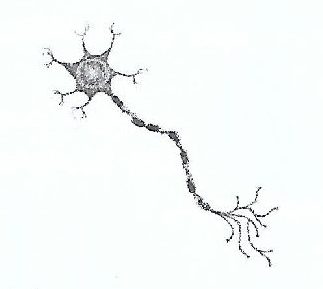
The neuron in the diagram below represents a:
- A.Multipolar neuron
- B.Anaxonic neuron
- C.Bipolar neuron
- D.Unipolar neuron
- 162 dhibcood
Hormones that work together in pairs to regulate the level of critical substances are referred to as:
- A.Lipophilic hormones
- B.Steroid hormones
- C.Antagonistic hormones
- D.Non-steroid hormones
- 172 dhibcood
The building block of nucleic acids (DNA and RNA) is
- A.AmiNo acids
- B.Fatty acids
- C.Deoxyribose
- D.Nucleotide
- 182 dhibcood
The increasing concentration of toxic substances in an organisms as trophic level increase in a food chain or food web is described as:
- A.Biological magnification
- B.Biological concentration
- C.Biological accumulation
- D.Biological toxicity
- 192 dhibcood
An enzyme that cuts DNA or genes into fragments is termed as:
- A.Isomerase
- B.Helicase
- C.Ligase
- D.Restriction
- 202 dhibcood
The breeding of two closely related cows to increase milk production is said to be..
- A.Inbreeding
- B.Cross breeding
- C.Hybridization
- D.Crossing over
PART II: Match the terms in column A with suitable descriptions in column B (10 marks)
- M11 dhibcood
Match the term in column A with the suitable description in column B: Fertilization. Column B descriptions: members of a pair homologous chromosome do not separate; lowers the level of glucose when it becomes rise above normal; controls the output of hormones from pituitary gland; bundles of thread like structures found in skeletal muscles; an organism's complete set of genetic materials; union of male gamete (sperm) and female gamete (egg) to form a zygote; sudden change or error that occur in the genetic materials; excessive nutrients in the aquatic ecosystem that destroys the habitat of fish; large oval opening that locate at the base of the human skull; transfer of genetic instruction in specific gene into RNA molecule.
- M21 dhibcood
Match the term in column A with the suitable description in column B: Mutation. Column B descriptions: members of a pair homologous chromosome do not separate; lowers the level of glucose when it becomes rise above normal; controls the output of hormones from pituitary gland; bundles of thread like structures found in skeletal muscles; an organism's complete set of genetic materials; union of male gamete (sperm) and female gamete (egg) to form a zygote; sudden change or error that occur in the genetic materials; excessive nutrients in the aquatic ecosystem that destroys the habitat of fish; large oval opening that locate at the base of the human skull; transfer of genetic instruction in specific gene into RNA molecule.
- M31 dhibcood
Match the term in column A with the suitable description in column B: Eutrophication. Column B descriptions: members of a pair homologous chromosome do not separate; lowers the level of glucose when it becomes rise above normal; controls the output of hormones from pituitary gland; bundles of thread like structures found in skeletal muscles; an organism's complete set of genetic materials; union of male gamete (sperm) and female gamete (egg) to form a zygote; sudden change or error that occur in the genetic materials; excessive nutrients in the aquatic ecosystem that destroys the habitat of fish; large oval opening that locate at the base of the human skull; transfer of genetic instruction in specific gene into RNA molecule.
- M41 dhibcood
Match the term in column A with the suitable description in column B: Foramen magnum. Column B descriptions: members of a pair homologous chromosome do not separate; lowers the level of glucose when it becomes rise above normal; controls the output of hormones from pituitary gland; bundles of thread like structures found in skeletal muscles; an organism's complete set of genetic materials; union of male gamete (sperm) and female gamete (egg) to form a zygote; sudden change or error that occur in the genetic materials; excessive nutrients in the aquatic ecosystem that destroys the habitat of fish; large oval opening that locate at the base of the human skull; transfer of genetic instruction in specific gene into RNA molecule.
- M51 dhibcood
Match the term in column A with the suitable description in column B: Transcription. Column B descriptions: members of a pair homologous chromosome do not separate; lowers the level of glucose when it becomes rise above normal; controls the output of hormones from pituitary gland; bundles of thread like structures found in skeletal muscles; an organism's complete set of genetic materials; union of male gamete (sperm) and female gamete (egg) to form a zygote; sudden change or error that occur in the genetic materials; excessive nutrients in the aquatic ecosystem that destroys the habitat of fish; large oval opening that locate at the base of the human skull; transfer of genetic instruction in specific gene into RNA molecule.
- M61 dhibcood
Match the term in column A with the suitable description in column B: Nondisjunction. Column B descriptions: members of a pair homologous chromosome do not separate; lowers the level of glucose when it becomes rise above normal; controls the output of hormones from pituitary gland; bundles of thread like structures found in skeletal muscles; an organism's complete set of genetic materials; union of male gamete (sperm) and female gamete (egg) to form a zygote; sudden change or error that occur in the genetic materials; excessive nutrients in the aquatic ecosystem that destroys the habitat of fish; large oval opening that locate at the base of the human skull; transfer of genetic instruction in specific gene into RNA molecule.
- M71 dhibcood
Match the term in column A with the suitable description in column B: Insulin. Column B descriptions: members of a pair homologous chromosome do not separate; lowers the level of glucose when it becomes rise above normal; controls the output of hormones from pituitary gland; bundles of thread like structures found in skeletal muscles; an organism's complete set of genetic materials; union of male gamete (sperm) and female gamete (egg) to form a zygote; sudden change or error that occur in the genetic materials; excessive nutrients in the aquatic ecosystem that destroys the habitat of fish; large oval opening that locate at the base of the human skull; transfer of genetic instruction in specific gene into RNA molecule.
- M81 dhibcood
Match the term in column A with the suitable description in column B: Hypothalamus. Column B descriptions: members of a pair homologous chromosome do not separate; lowers the level of glucose when it becomes rise above normal; controls the output of hormones from pituitary gland; bundles of thread like structures found in skeletal muscles; an organism's complete set of genetic materials; union of male gamete (sperm) and female gamete (egg) to form a zygote; sudden change or error that occur in the genetic materials; excessive nutrients in the aquatic ecosystem that destroys the habitat of fish; large oval opening that locate at the base of the human skull; transfer of genetic instruction in specific gene into RNA molecule.
- M91 dhibcood
Match the term in column A with the suitable description in column B: Myofibrils. Column B descriptions: members of a pair homologous chromosome do not separate; lowers the level of glucose when it becomes rise above normal; controls the output of hormones from pituitary gland; bundles of thread like structures found in skeletal muscles; an organism's complete set of genetic materials; union of male gamete (sperm) and female gamete (egg) to form a zygote; sudden change or error that occur in the genetic materials; excessive nutrients in the aquatic ecosystem that destroys the habitat of fish; large oval opening that locate at the base of the human skull; transfer of genetic instruction in specific gene into RNA molecule.
- M101 dhibcood
Match the term in column A with the suitable description in column B: Genome. Column B descriptions: members of a pair homologous chromosome do not separate; lowers the level of glucose when it becomes rise above normal; controls the output of hormones from pituitary gland; bundles of thread like structures found in skeletal muscles; an organism's complete set of genetic materials; union of male gamete (sperm) and female gamete (egg) to form a zygote; sudden change or error that occur in the genetic materials; excessive nutrients in the aquatic ecosystem that destroys the habitat of fish; large oval opening that locate at the base of the human skull; transfer of genetic instruction in specific gene into RNA molecule.
PART III: Use the information in the box below to fill the gaps (10 marks)
Epidermis, Rods, Cerebrum, Pectoral girdle, Deoxyribose, Dwarfism, Consumer, Proteomics, Myosin, Peptide bond
- F11 dhibcood
The largest part of the brain is _____. (Words in the box: Epidermis, Rods, Cerebrum, Pectoral girdle, Deoxyribose, Dwarfism, Consumer, Proteomics, Myosin, Peptide bond.)
- F21 dhibcood
Too low growth hormone causes a condition referred to as _____. (Words in the box: Epidermis, Rods, Cerebrum, Pectoral girdle, Deoxyribose, Dwarfism, Consumer, Proteomics, Myosin, Peptide bond.)
- F31 dhibcood
The type of sugar that constitute DNA is _____. (Words in the box: Epidermis, Rods, Cerebrum, Pectoral girdle, Deoxyribose, Dwarfism, Consumer, Proteomics, Myosin, Peptide bond.)
- F41 dhibcood
The outermost layer of human skin is called _____. (Words in the box: Epidermis, Rods, Cerebrum, Pectoral girdle, Deoxyribose, Dwarfism, Consumer, Proteomics, Myosin, Peptide bond.)
- F51 dhibcood
In a food chain the trophic level of grazing animals can be categorized as primary _____. (Words in the box: Epidermis, Rods, Cerebrum, Pectoral girdle, Deoxyribose, Dwarfism, Consumer, Proteomics, Myosin, Peptide bond.)
- F61 dhibcood
The light-sensitive cells that are excited by low levels of light is _____. (Words in the box: Epidermis, Rods, Cerebrum, Pectoral girdle, Deoxyribose, Dwarfism, Consumer, Proteomics, Myosin, Peptide bond.)
- F71 dhibcood
The thick filamentous protein that constitute the skeletal muscle fibers is _____. (Words in the box: Epidermis, Rods, Cerebrum, Pectoral girdle, Deoxyribose, Dwarfism, Consumer, Proteomics, Myosin, Peptide bond.)
- F81 dhibcood
The bond that links amino acids in a protein is called _____. (Words in the box: Epidermis, Rods, Cerebrum, Pectoral girdle, Deoxyribose, Dwarfism, Consumer, Proteomics, Myosin, Peptide bond.)
- F91 dhibcood
The large scale study and cataloguing of the structure and function of proteins in the human body is called _____. (Words in the box: Epidermis, Rods, Cerebrum, Pectoral girdle, Deoxyribose, Dwarfism, Consumer, Proteomics, Myosin, Peptide bond.)
- F101 dhibcood
The upper limbs are connected to the axial skeleton by _____. (Words in the box: Epidermis, Rods, Cerebrum, Pectoral girdle, Deoxyribose, Dwarfism, Consumer, Proteomics, Myosin, Peptide bond.)
PART IV: Answer All of the Following Questions
- Q1a2 dhibcood
Define the following terms: a) Genetic engineering
- Q1b2 dhibcood
Define the following terms: b) Biodiversity
- Q24 dhibcood
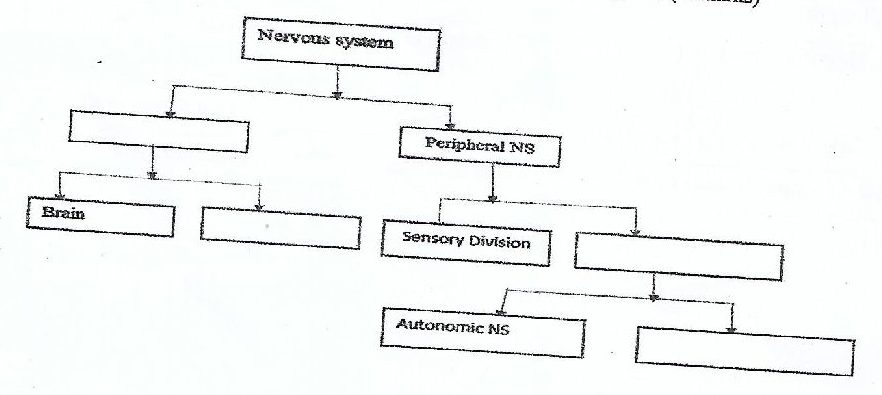
Identify the main parts of nervous system based on the flow chart given. Flow chart: Nervous system divides into [box 1] and Peripheral NS. [Box 1] divides into Brain and [box 2]. Peripheral NS divides into Sensory Division and [box 3]. [Box 3] divides into Autonomic NS and [box 4].
- Q34 dhibcood
Ahmed has broken his leg in football match to the extent that his bone was protruding through his skin, identify the type of fracture.
- Q44 dhibcood
Describe uses of DNA fingerprinting in our life?
- Q56 dhibcood
Using a punnet square, find the phenotype ration of two heterozygote plants (Tt) for their F1 generation.
- Q63 dhibcood
State the three structural parts of the nucleotide
- Q74 dhibcood
Summarize the importance of DNA replication
- Q84 dhibcood
The sequence of DNA strand is ACGTTG, Write the complementary strand of this DNA.
- Q93 dhibcood
Mention at least three functions of the human skin
- Q104 dhibcood
Differentiate between species diversity and genetic diversity?
Imtixaanka waxaa diyaarisay Federal Ministry of Education, Culture and Higher Education (MoECHE), Somalia. Waxaa lagu wadaagay bilaash si ardaydu ugu diyaargaroobaan. Jawaabaha iyo sharaxyada waxaa qoray macallimiinta Sheerxirfad.
Imtixaanada kale ee hore ee Form 4 Biology
- Imtixaanka qaranka 2024/202562 su'aalood, 100 dhibcood, 120 daqiiqo
- Imtixaanka qaranka 202462 su'aalood, 100 dhibcood, 120 daqiiqo
- Imtixaanka qaranka 202136 su'aalood, 100 dhibcood, 120 daqiiqo
- Imtixaanka qaranka 202042 su'aalood, 100 dhibcood, 120 daqiiqo
- Imtixaanka qaranka 201840 su'aalood, 100 dhibcood, 120 daqiiqo